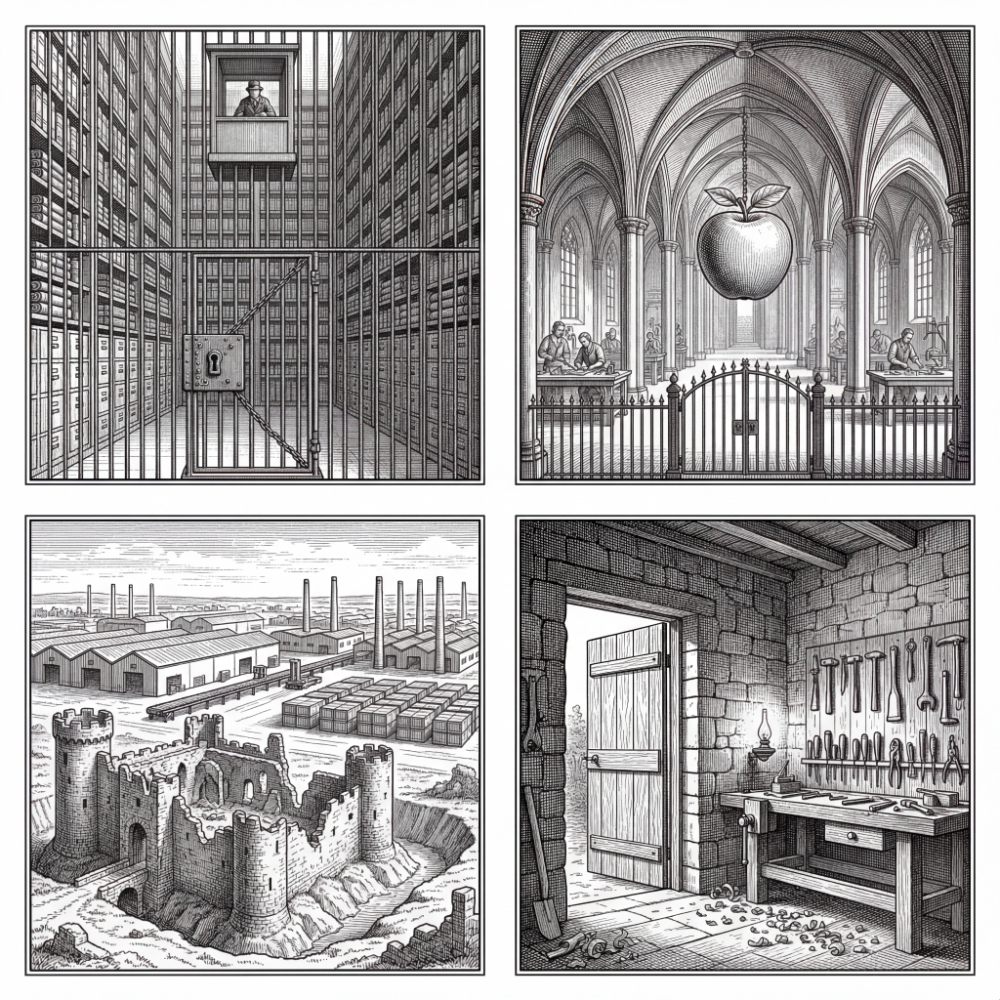
Bleuprint is a place for long-form essays on software, how we build, and the alternatives to the usual scale-and-growth playbook. I write about small teams that last, tools that respect their users, and the kind of tech criticism that leans on sources and stories rather than hot takes.
The pieces here mix structure (footnotes, definitions, the occasional diagram) with a personal angle. Ideas get revised over time; some posts are polished, others are clearly work in progress. That’s intentional.
The name Bleuprint is a nod to technical schematics and architecture drawings — the kind of plans that show how something is meant to be built. I’ve always liked that aesthetic. The spelling with bleu is French for “blue,” a color I’m fond of, and a language I enjoy. So: blueprints as in the diagrams, plus bleu as in the color and the word.
What you’ll find here
Essays. Long-form pieces on how we work, who builds what, and why the default path isn’t the only one. Recurring themes: the Digital-Mittelstand, convivial tools, the Software Meal Tier System. Less jargon, more lenses.
Form and voice. I borrow from the way the Encyclopédie treated crafts — serious documentation, but grounded in practice. So: diagrams and definitions when they help, narrative when it does.
Who it’s for
Readers who care about mastery and longevity over hype, and who don’t need every take to sound like VC Twitter. If that’s you, you’ll find something here; if not, no hard feelings.
About me
Bleuprint is run by Flowian. I’ve worked in and around startups in Europe. The essays are where I work out what I think; the arguments are meant to hold up to scrutiny.
Stay in touch
New essays and notes go out by email. Subscribe to get them when they’re published — no algorithm, no feed. You can also browse the archive or start with the essays on the homepage.
Thanks for reading.